Did a data centre revolt affect the US mid-term election results?
정보 출처자체 인터뷰BBC Verify 검증언급: AP 통신
기사 본문
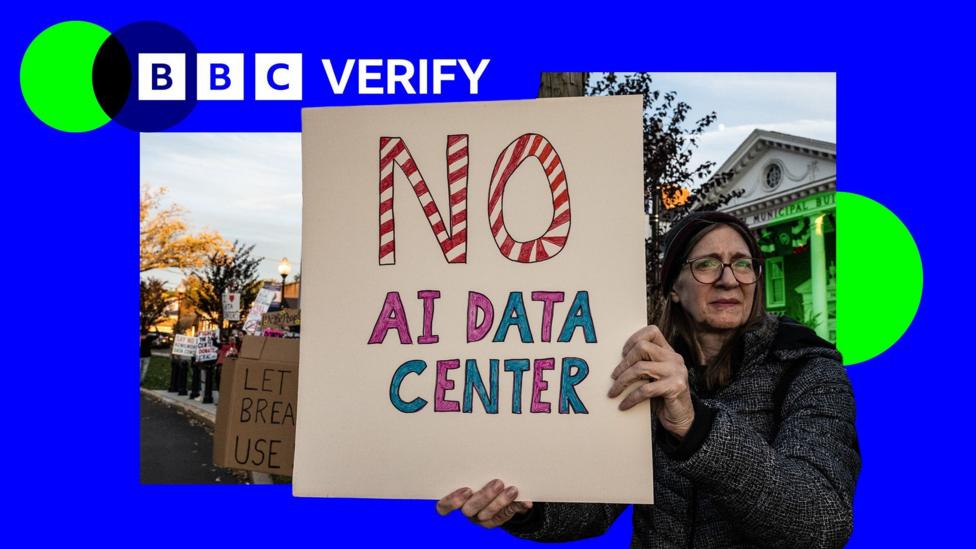
32개 단락 · 단어를 탭(클릭)하거나 문장을 선택하면 번역 · 단어 탭/문장 선택으로 번역A US midterms voter poll has suggested data centres were a highly motivating issue for many Americans, leading some to argue public backlash against the artificial intelligence (AI) infrastructure construction boom might have helped shape the election outcome.
BBC Verify has looked at its role in the campaign and examined the potential consequences for the AI industry.
The poll for AP and a consortium of news organisations found 56% of surveyed voters said data centres were a "crucial or major" factor in their vote, while 76% said they would oppose the construction of a new data centre in their community.
The hostile sentiment was considerably stronger among those who said they voted Democrat at this election.
This follows other recent Pew Research polling , external which suggested about half of Americans think data centres are "mostly bad" for the environment, home energy costs and quality of life, a big deterioration in favourability since January.
The congressional voter poll results certainly suggest a remarkable degree of salience for a subject which likely would not have been on most Americans' radar five years ago.
However, it is some way behind several key issues people considered "crucial or major factors" in their vote, including government corruption (90%) and the cost of living (89%).
Three of the Senate seats flipped by the Democrats have significantly more data centres , external , Texas (595), Ohio (258) and Iowa (117), than the median of 55 across all 50 states.
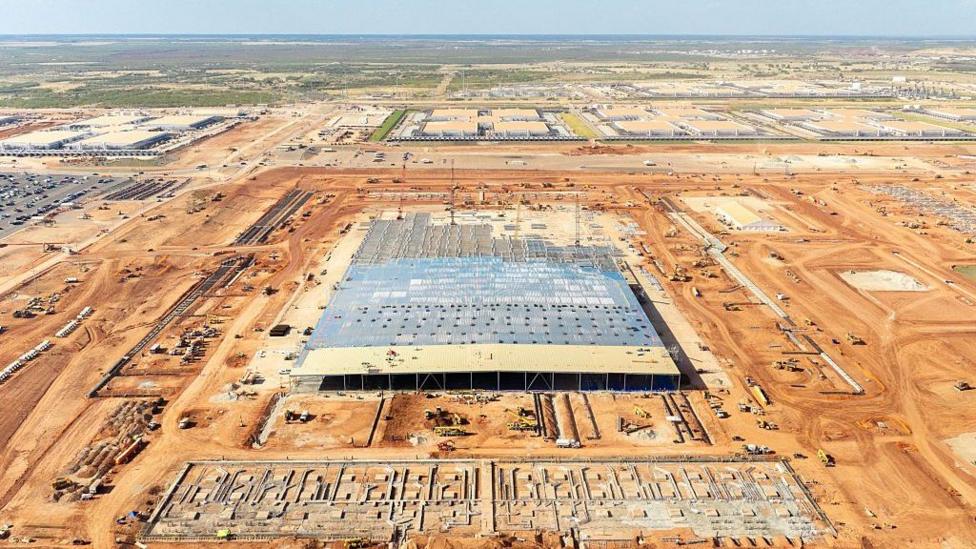
And Texas alone has 31 ongoing data centre construction projects, the most of any state , external .
But other factors would also have been motivating voters in these states, as elsewhere.
BBC Verify analysis of state-level voter polling for Senate elections suggests states which swung to the Democrats either followed the national trend over data centre concerns, or seemed less concerned.
So we can't say how many votes or Senate seats were directly delivered by data centre opposition.
But it's notable that three key states in the US AI build-out, Texas, Georgia and Ohio, all elected Democrats as senators and governors who called for tighter regulation on data centres in one form or another.
These proposals include:
temporary bans on construction
ending tax breaks
requirements to fully cover their own energy and water infrastructure costs
mandates to use unionised construction workers
stricter environmental and transparency safeguards
local rights to veto
The US economy has been heavily supported in recent years by massive corporate investments in AI , external , including for data centre construction.
Official data , external shows inflation-adjusted monthly spending on building data centres, excluding the IT hardware to go into them, in August 2026 was $5bn (£4.2bn) - five times higher than in 2023.
Analysis by Columbia Business School , external suggests AI infrastructure investment in the US is currently larger as a share of the overall economy than spending on new railways was at the height of that boom in the 19th Century.
Cori Crider, executive director of the Future of Tech Institute, a European think tank, told BBC Verify the industry should anticipate that new state leaders will put conditions on or "even stop runaway data centre build".
Seema Shah, from global investment firm Principal Asset Management, said requirements for developers to pay for additional investment in the electricity grid, meet tougher standards over their usage of resources like water, or give up tax incentives could "raise development costs and slow new supply".
However, Heather West from the Eurasia Group consultancy said temporary bans on construction and new regulations might delay the data centre roll out, but would not stop it entirely.
She said "projects already permitted or under construction will largely proceed", but delays would affect the "next wave" of building through "local fights, slower permitting, and pressure to make data centres pay for their own power".
Analysts from the consultancy Oxford Economics have said there are also strong economic incentives for politicians to avoid policies that would severely disrupt data centre construction, pointing to tax revenue and construction jobs they bring.
Deepak Surana of the Futurum Group, a technology research firm, said he expected there would ultimately be "a negotiation, not a moratorium" from Texas state leaders on data centres to ensure no negative impact on residents' energy and water bills.
OpenAI, which has a data centre in Texas and under-construction projects in Ohio, pledged to ensure it fully paid for its own electricity on Thursday , external - one day after the midterm results.
Additional reporting by Nicholas Barrett
What do you want BBC Verify to investigate?
단락별 번역이 어긋날 때
전문 번역
이 기사의 이미지 2

단어를 탭(클릭)하면 그 단어를, 문장을 선택하면 그 범위를 바로 번역합니다.