Delhi air quality worsens ahead of Diwali as firework restrictions enter force
Article text
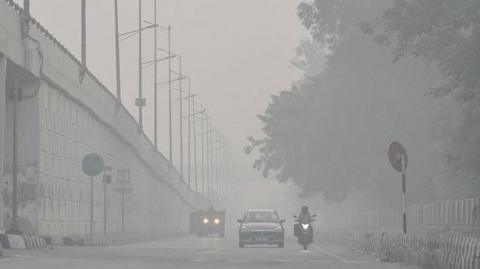
28 paragraphs · Tap (click) a word or select text to translate · Tap a word or select text to translateDelhi is once again battling worsening air pollution as the onset of winter brings a familiar deterioration in air quality.
The city's Air Quality Index (AQI) - which measures PM2.5, fine particulate matter that can clog lungs - has crossed 300, entering the "very poor" category and raising health concerns for millions of residents.
Breathing such polluted air over prolonged periods can cause respiratory problems and worsen existing illnesses, with children and older people particularly vulnerable.
Authorities have responded by invoking Stage II of the Graded Response Action Plan (GRAP), introducing measures to curb dust, vehicle emissions and other sources of pollution.
Delhi and neighbouring parts of northern India grapple with hazardous air every winter, particularly around Diwali, one of India's biggest festivals, which is just days away.
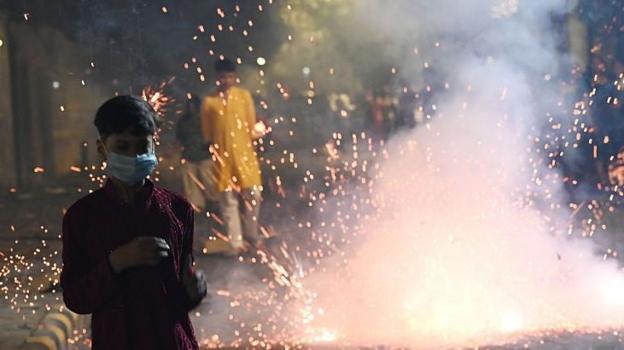
The festival is celebrated with lights, lamps and fireworks, which often worsen the city's already poor air quality by releasing fine particles and harmful gases into the atmosphere.
The annual pollution crisis is driven by a combination of factors, including vehicle exhaust, industrial emissions, falling temperatures, low wind speeds and the burning of crop stubble in neighbouring states.
The sharp rise in pollution follows an unusually clean October, when Delhi recorded its lowest average AQI for the month in eight years.
Experts have attributed the sudden deterioration to falling temperatures, slow winds and an increase in crop-residue burning in the neighbouring states of Punjab and Haryana.
A recent storm had brought rain and stronger winds, helping clear the air. But as the weather settled, north-westerly winds returned, carrying smoke from burning fields towards the capital.
India's pollution watchdog classifies AQI readings between 301 and 400 as "very poor", while anything above 400 is considered "severe". On Wednesday morning, Delhi's AQI stood at 377.
The index takes into account eight major pollutants, including PM2.5 - tiny particles about 30 times smaller than the width of a human hair that can penetrate deep into the lungs.
With Diwali just days away, there are concerns that fireworks could push pollution levels even higher.
Last year, Delhi woke up to a toxic haze the morning after the festival, despite a court directive to use less-polluting firecrackers.
Authorities have imposed restrictions on firecrackers over the years, including outright bans on their manufacture, sale and use, but enforcing them has proved difficult.
On Monday, India's Supreme Court allowed the manufacture, sale and use of certified green firecrackers in Delhi and neighbouring areas for a limited period.
It said the crackers could be set off only between 06:00 and 07:00 local time (00:30-01:30 GMT) and between 20:00 and 22:00 (14:30-16:30 GMT) on 7 and 8 November, during the Diwali weekend.
The court also banned fireworks within 300m of hospitals, care homes, schools and other designated silence zones.
Green firecrackers use modified chemical formulations designed to produce fewer emissions than conventional fireworks. They must carry QR codes that allow buyers and authorities to verify details of their manufacturer and certification.
But ensuring that only approved firecrackers are sold remains a major challenge.
In its latest order, the Supreme Court acknowledged that conventional firecrackers had continued to be sold as green alternatives, even when a complete ban was in place.
It has directed police to patrol designated sales areas, carry out random QR-code checks and seize illegal firecrackers.
During particularly severe pollution episodes, Delhi authorities have also introduced measures such as hybrid schooling, work-from-home arrangements and restrictions on certain vehicles.
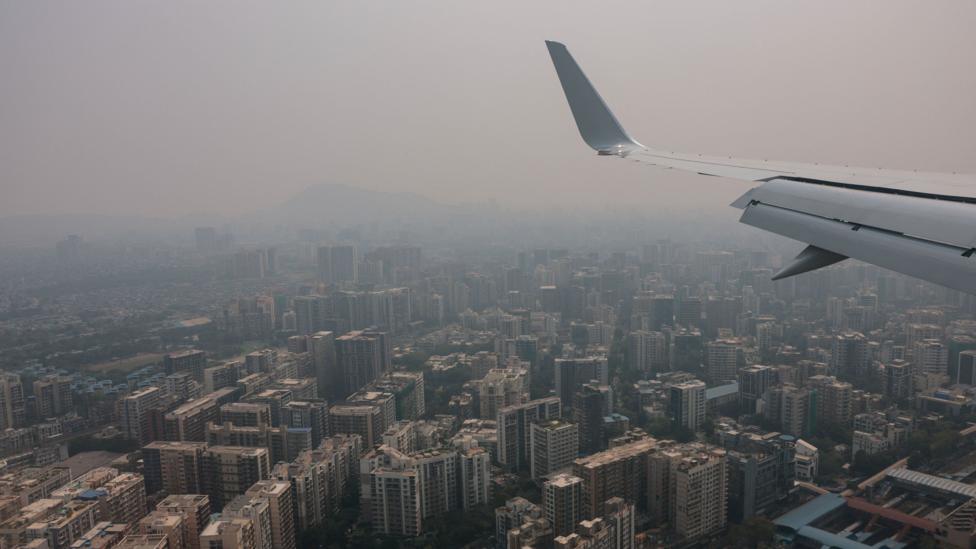
The problem is not confined to the capital. Mumbai, India's financial hub, has also recorded elevated pollution levels over the past month, despite benefiting from coastal winds that typically help disperse pollutants.
On 24 October, Mumbai's AQI had reached 322, placing it in the "very poor" category. The spike was attributed to a combination of low wind speeds, construction dust, garbage burning, firecracker emissions and pollutants carried from neighbouring regions.
The city's air quality has improved in recent days - and it recorded an AQI of 89, classified as "satisfactory", on Wednesday. Neighbouring Navi Mumbai recorded a "moderate" AQI of 118.
The improvement follows nearly two weeks of smoggy conditions, with residents sharing photos and videos of the haze on social media.
Follow BBC News India on Instagram , external , YouTube, , external Twitter , external and Facebook , external .
For when the paragraph translations don't line up
Full translation
Image from this article 2
Tap (click) a word to translate it, or select text to translate that passage straight away.