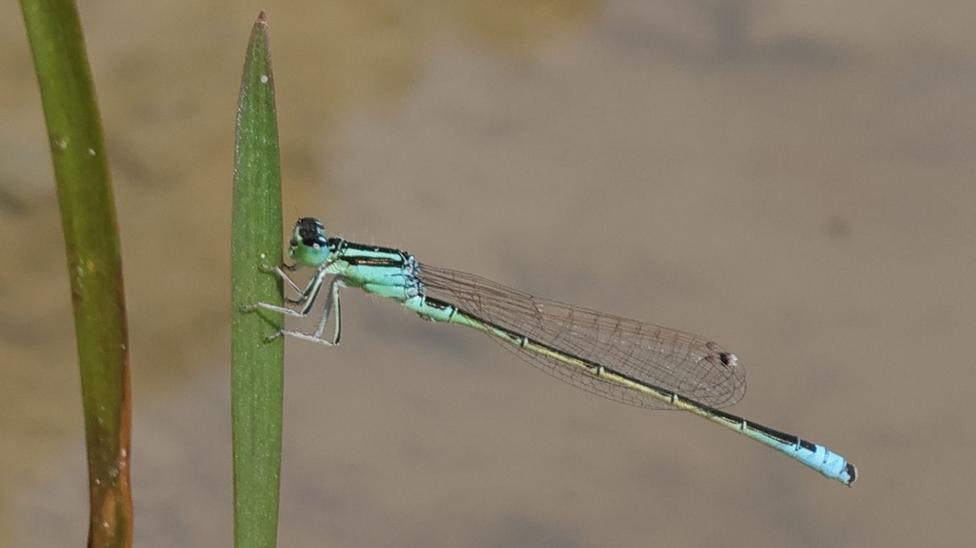
Rare damselfly spotted by restored chalk river
Article text
16 paragraphs · Tap (click) a word or select text to translate · Tap a word or select text to translateAn endangered damselfly has been spotted in wetlands created by an "ambitious" project that restored a stretch of a rare chalk river.
The scare blue-tailed damselfly, one of the world's earliest flying insect species, was recorded alongside the River Ash near Hertford.
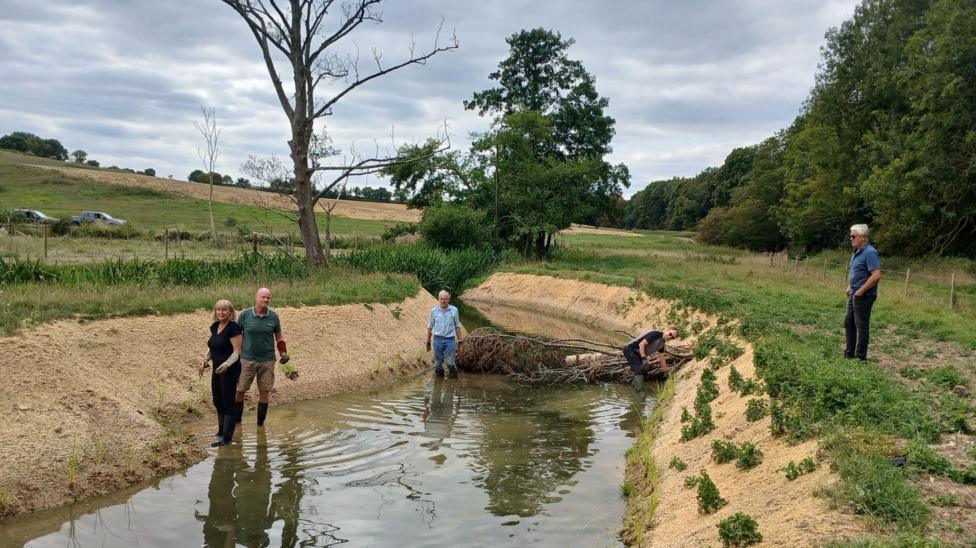
The 4.3-mile (7km) stretch at the Easneye Estate was restored to its original course last year.
The Herts and Middlesex Wildlife Trust said that for species facing increasing pressure, creating and restoring suitable habitats was "vital to reversing declines".
The scarce blue-tailed damselfly was recorded at two monitoring sites located close together in late summer.
A new assessment of Britain's dragonflies and damselflies highlighted growing concerns about the future of some species.
The British Dragonfly Society's Red List , external review reclassified the scarce blue-tailed damselfly from Near Threatened to Endangered.
It found that eight species were now classed as endangered, twice the number identified in the previous assessment in 2008.
The River Ash is one of about 260 chalk rivers in the world, and the restoration project has included the creation of new gravel beds.
The trust said brown trout were already spawning on them.
In addition, monitoring carried out before and after the restoration found an increase in river invertebrates, including mayflies and stoneflies.
Sarah Perry, rivers recovery manager at the trust said: "Natural rivers, connected floodplains and healthy wetlands support biodiversity by providing places for wildlife to feed and breed.
"They also help water move through the landscape and can contribute to resilience against both flooding and drought.
"The scarce blue-tailed damselfly sightings along the River Ash offer a hopeful example of what these efforts can achieve."
Do you have a story suggestion for Beds, Herts or Bucks? Contact us below.
Follow Beds, Herts and Bucks news on BBC Sounds , Facebook , external , Instagram , external and X , external .
For when the paragraph translations don't line up
Full translation
Image from this article 1
Tap (click) a word to translate it, or select text to translate that passage straight away.