Shock of rail tragedy gives way to sorrow and outrage in politically divided Spain
情報の出どころ独自インタビュー
記事本文
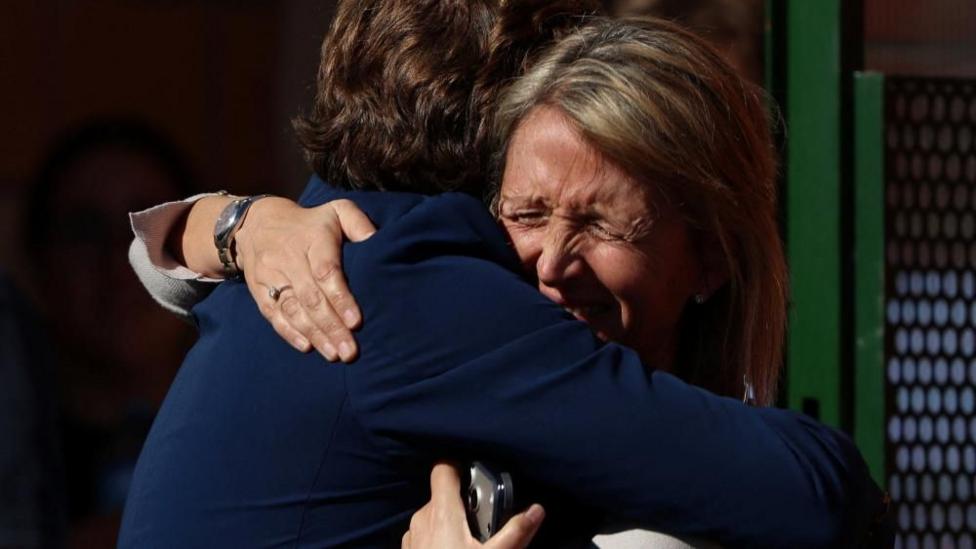
25 段落 · 単語をタップ(クリック)または文章を選ぶと翻訳 · 単語をタップ/文章を選ぶと翻訳The chaos and horror of Spain's second rail tragedy this year has been conveyed vividly by survivors of Wednesday's high-speed crash that has left at least 69 people dead.
But as Spain holds three days of mourning, revelations from leaked audio recordings of the apparent human error in a control room in the minutes before this disaster happened have given way to public disbelief and outrage, in a highly politicised climate, exactly a month before Spaniards go to the polls.
"You don't know what's happening, you don't know what has happened, you just know that you're being thrown around in a matter of seconds," said Iñaki García, 60.
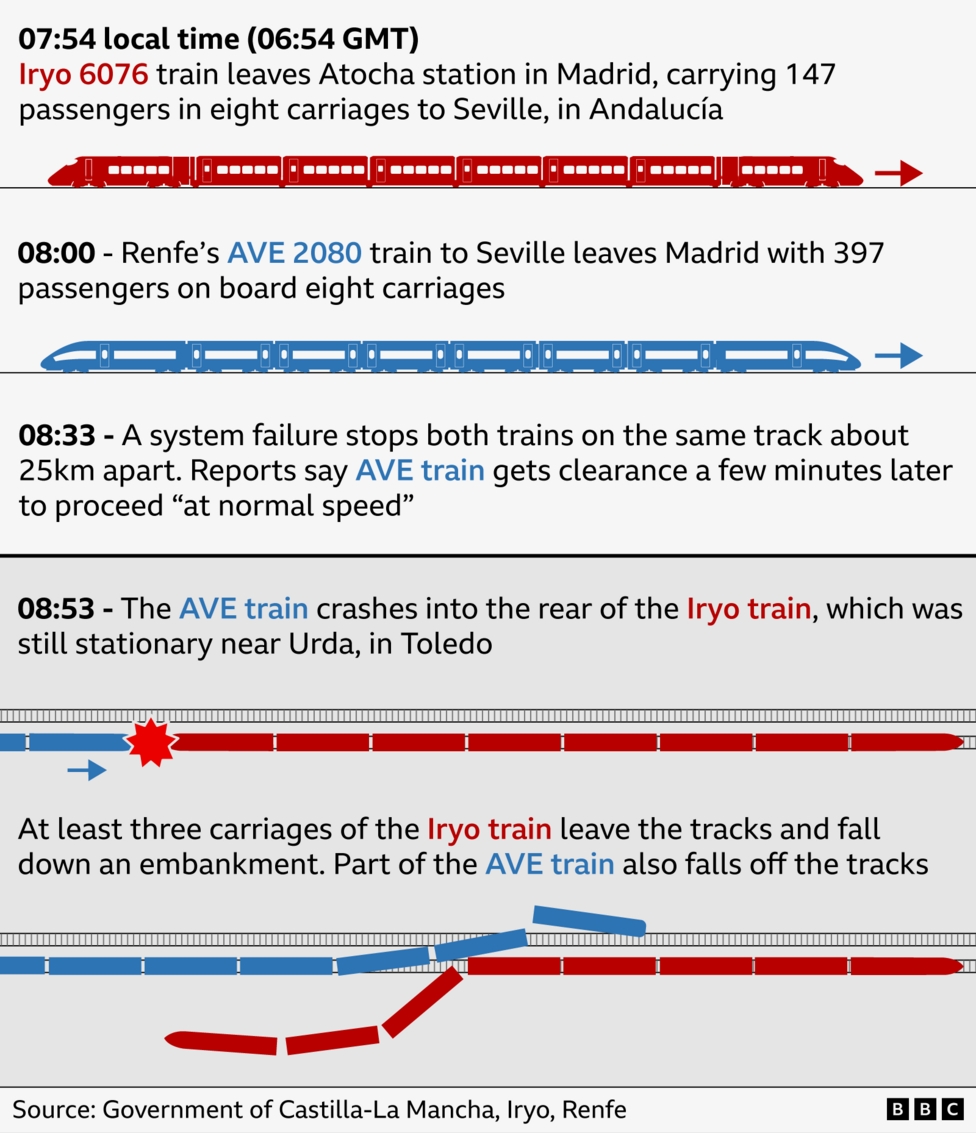
He was on the stationary Iryo train that was rammed from behind by a Renfe train on the Madrid-Seville line near Urda, around 140km (87 miles) south of the capital.
"There were people injured, walking around, there were dead people," he said. "In the next carriage along there were a lot of dead people."
Recalling the horrific scenes around him, one young man told the BBC in a quivering voice: "I don't know if that's something I'll ever recover from."
Stories of tragedy have continued to emerge. A pharmacist from Urda was one of the first to reach the scene, bringing with him first aid supplies and medicine.
"One of [the passengers] was saying goodbye to his wife and children. His last words were 'God is good'," Antonio García told Spanish radio.
Similar scenes of grief played out only nine months ago in the southern village of Adamuz, when a collision on the same Madrid-Seville route killed 46 people.
Now, in the town of Urda, just like Adamuz, awful stories are combined with acts of kindness and solidarity.
Locals turned out to help the injured, bringing blankets, food and water to a nearby sports hall that was converted into a makeshift hospital for much of the day.
"We all started to turn out to help and we organised ourselves as best we could," said Rosa María Domínguez, a local woman, who described the scene as "a horror film".
However, the overriding sentiment that these two tragedies have generated is one of confusion and a failure to comprehend how this could have happened.
Not long ago, the speed, efficiency and safety of Spain's high-speed rail system, the largest in Europe, was the envy of its neighbours.
The Adamuz crash triggered a nationwide debate about whether the network was fit for purpose.
This latest incident intensifies pressure on the left-wing government of Pedro Sánchez, in the middle of an election campaign where his Socialist PSOE is behind the conservatives in most opinion polls.
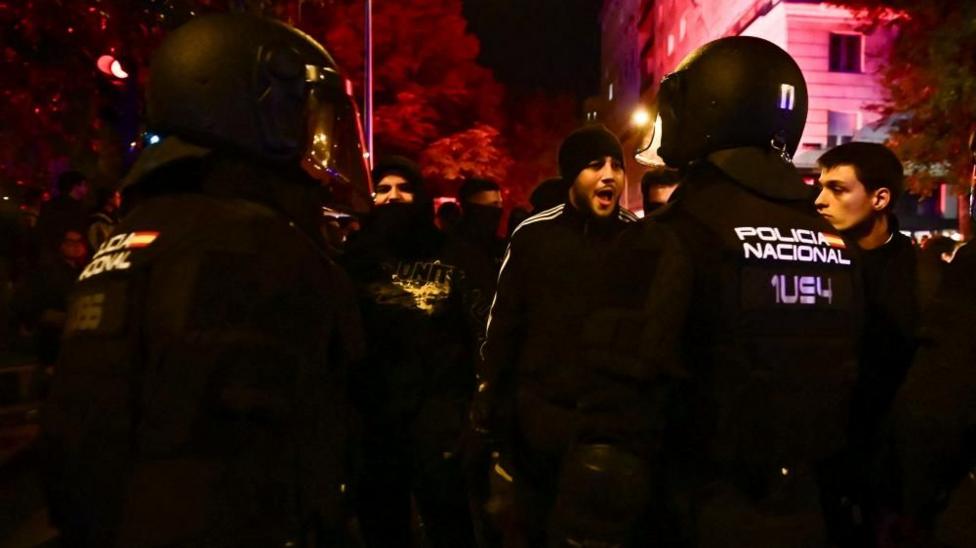
On Wednesday night a demonstration protesting at the government's handling of the rail network saw far-right groups turn out and clash with police.
Although the main parties, other than the far-right Vox, have suspended campaigning, Sánchez has twice visited the scene of the crash and his People's Party rival Alberto Núñez Feijóo came to Urda on Thursday.
Sánchez's transport minister, Óscar Puente, made clear from the start that a computer failure followed by human error was the likely cause of the crash. By late evening, leaked audio recordings of a control-room operator talking to train drivers appeared to back that up.
Puente has long been a hate figure for the right, and with two of the worst rail tragedies in Spanish history taking place on his watch, the criticism is only going to increase.
Spain's biggest train drivers' union Semaf condemned the leak of audio recordings as irresponsible and slanted. The union had already called a strike for Thursday in a bid to ensure that "urgency to travel is never prioritised over safety".
One train driver, Vicente Almenar, told Spanish media: "They always look for the last link in the chain, where it's weakest, but here the entire procedure failed because we don't even know what our colleague was seeing on the screen," he told Spanish media.
Sánchez had not been expecting rail safety to dominate his campaign, but that now looks increasingly likely.
After two accidents and more than 100 deaths on the same high-speed line, Feijóo told reporters in Urda on Thursday: "The Spanish people need answers. They are wondering what is happening to high-speed rail in their country."
And he emphasised that politics was not about talking - it was about acting.
段落ごとの訳がずれるときに
全文翻訳
この記事の画像 2
単語をタップ(クリック)すると単語を、文章を選ぶとその範囲をすぐに翻訳します。